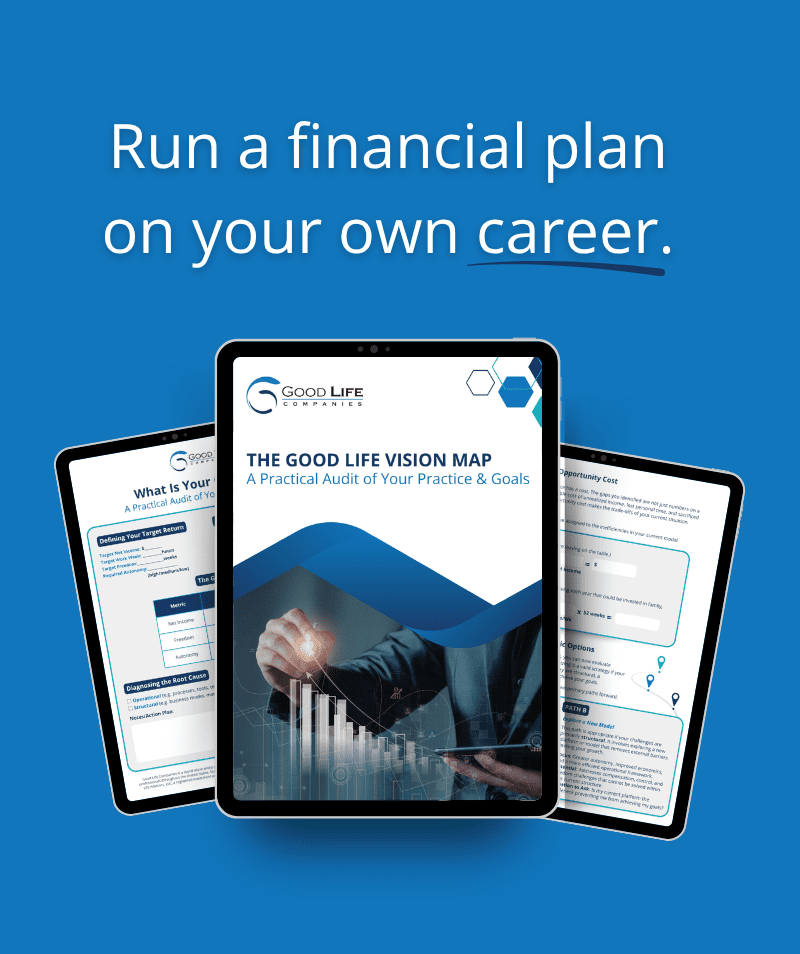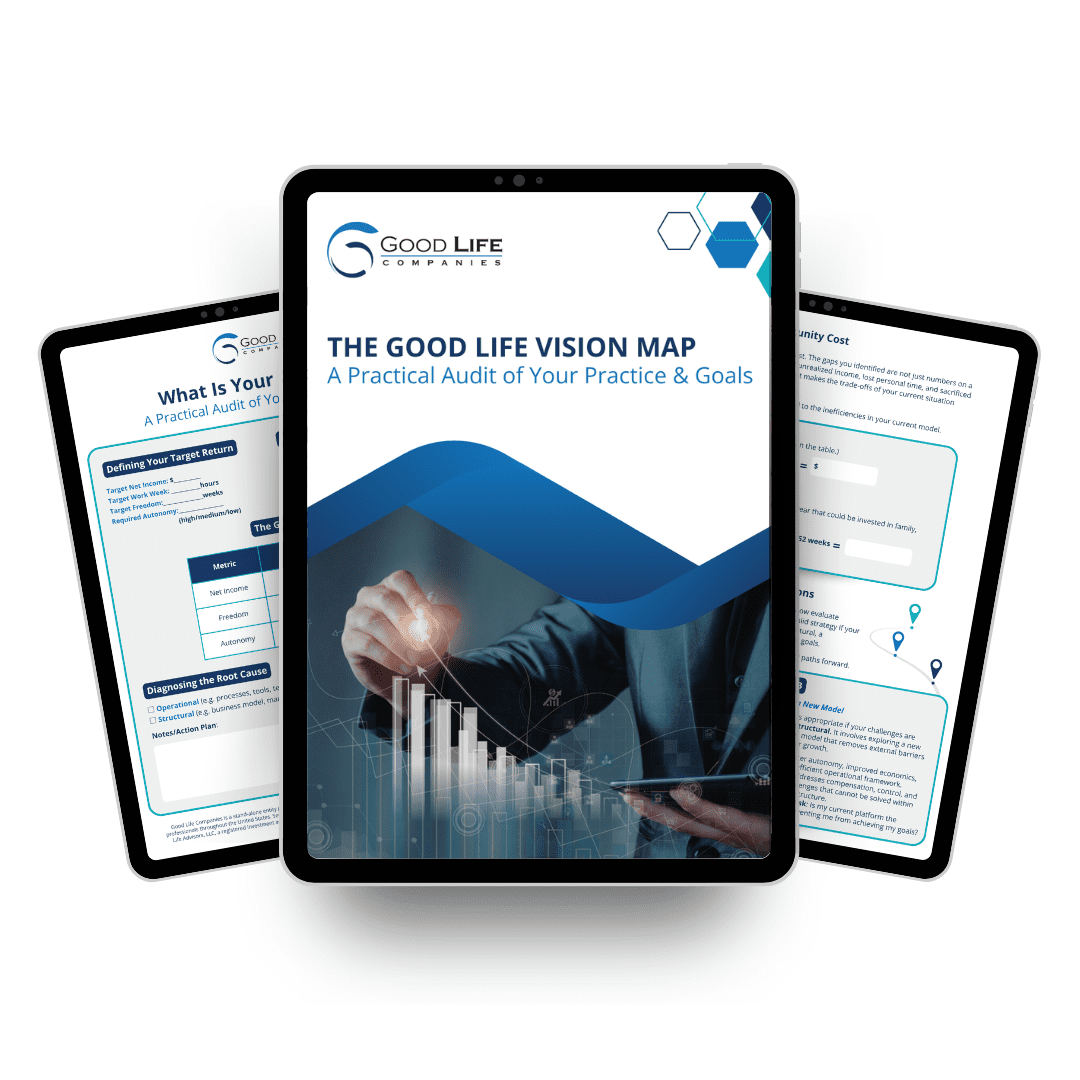
As December continues and another year winds down, you’re probably having the same conversations with your clients that you have every year: reflecting on what worked, what didn’t, and what they want the next year to look like.
But let’s be honest about something we don’t often acknowledge: as financial advisors, you excel at guiding clients through goal-setting, yet frequently overlook this process for your own practices.
You spend your days guiding others toward financial success and personal fulfillment. You help them define what matters, create actionable plans, and stay accountable, but when was the last time you gave yourself that same level of attention?
As we head into 2026, consider this your invitation to build the practice you actually want, not the one that just happens to you, but the one you deliberately design.
Luckily, success doesn’t require a complete overhaul. It starts with clarity on what you want and commitment to making it happen. Here are five goals every independent advisor should consider as we enter the new year.
Goal 1: Define Your Version of Growth (And Make It Happen)
When someone asks about your growth goals, what comes to mind? More AUM? More clients? Higher revenue?
Those are valid metrics, but they’re not the only definition of growth. The most successful advisors have learned that growth needs to align with their vision, not someone else’s benchmark.
Ask yourself: What kind of growth do I actually want?
Maybe you want to grow assets under management to hit a specific revenue target. Perhaps you’d rather deepen relationships with existing clients than constantly chase new ones, or maybe growth means adding a niche specialization that energizes you and sets your practice apart.
Growth could also mean:
- Adding a new advisor to your team so you can focus on strategic work instead of drowning in client meetings
- Hiring an administrator who handles operations, freeing you to do what you do best
- Expanding your service offering with estate planning, tax strategy, or risk management
- Building a more scalable business model that doesn’t require trading your time for revenue
Goal-setting tip: Get specific about what growth looks like for you. “Grow my business” is vague. “Add $20M in new assets by focusing on business owners in the tech sector,” or “Hire a part-time admin by Q2 to handle scheduling and client communications” is actionable.
Write it down. Assign a timeline. Break it into quarterly milestones, and most importantly, make sure the growth you’re chasing actually serves the life you want to live.
Goal 2: Reclaim Your Time (Work-Life Balance Isn’t a Luxury)
Let’s be honest: how many family dinners have you missed this year? How many weekends got interrupted by client emergencies or back-office work that could have waited?
Ask yourself: What does balance actually look like for me?
For some advisors, balance means a hard stop at 5 PM to coach their kids’ sports teams. For others, it’s taking Fridays off during the summer or unplugging completely for a two-week vacation.
Balance might also mean:
- Setting boundaries around client communication (no calls after 6 PM or on weekends unless it’s truly urgent)
- Blocking time on your calendar for strategic planning or personal development
- Delegating tasks that drain your energy so you can focus on high-value work
- Building systems that allow your business to run smoothly even when you’re not available
Goal-setting tip: Identify one specific change you can make in Q1 that immediately improves your work-life balance. That could be hiring someone, implementing a client communication policy, or simply protecting one evening a week for family time and actually sticking to it.
Balance isn’t about working less. It’s about working smarter and protecting what matters most.
Goal 3: Reduce Stress by Increasing Operational Efficiency
If you’re spending more time on operations than you are on clients and growth, something needs to change.
Independent advisors wear many hats: portfolio manager, compliance officer, marketer, IT troubleshooter, scheduler. But just because you can do it all doesn’t mean you should.
Operational inefficiency doesn’t just waste time, it creates stress, kills momentum, and prevents you from doing the work that actually moves your business forward.
Ask yourself: What’s draining my energy that doesn’t require my expertise?
The answer might surprise you. Most advisors tolerate inefficiencies because they’ve always done things a certain way, or because fixing them feels like one more project on an already overwhelming to-do list.
Improving operational efficiency could mean:
- Investing in better technology that automates reporting, rebalancing, or client communication
- Outsourcing back-office tasks like billing, compliance paperwork, or account transfers
- Creating standardized processes for onboarding, annual reviews, or financial planning deliverables
- Redesigning your service model so you’re not reinventing the wheel for every client
Goal-setting tip: Conduct an honest audit of where your time goes for one week. Track it. Then identify the top three tasks that drain your energy, but don’t require your unique expertise. Those are your delegation or automation targets for 2026.
Efficiency isn’t about cutting corners. It’s about creating margin so you can focus on what you do best.
Goal 4: Invest in Your Brand and Market Presence
You’re great at what you do, but if people don’t know you exist, it doesn’t matter.
Marketing often falls to the bottom of an advisor’s priority list because it doesn’t feel urgent. There’s no immediate consequence to skipping it this week, but over time, neglecting your brand and visibility costs you growth, referrals, and opportunities.
Ask yourself: How am I showing up in my community and online?
Building a strong market presence doesn’t mean you need a massive marketing budget or a full-time team. It means being intentional about how you connect with prospects and stay top-of-mind with clients.
Investing in your brand and presence might look like:
- Creating a new website that reflects your expertise, communicates your value, and makes it easy for prospects to reach out
- Getting active on social media by sharing insights, educating your audience, and building credibility in your niche
- Networking in your community through local business groups, chambers of commerce, or charitable organizations
- Publishing content like blogs, videos, or newsletters that position you as a trusted resource
- Asking for referrals systematically instead of hoping they happen organically
Goal-setting tip: Pick one marketing initiative for 2026 and commit to it consistently. Don’t try to do everything. If you publish a monthly blog for 12 months, that’s progress. If you attend two networking events per quarter, that’s visibility. Small, consistent actions compound over time.
Your expertise deserves to be seen. Make 2026 the year you invest in making that happen.
Goal 5: Prioritize Your Personal Well-Being (Because You Can’t Pour from an Empty Cup)
Here’s something we don’t talk about enough in this industry: your physical and mental health directly impacts your business.
Advisors who prioritize fitness, rest, and personal fulfillment tend to be sharper, more disciplined, and more resilient. They show up better for clients, make clearer decisions, handle stress more effectively, and they build practices that thrive instead of just survive.
Our CEO recently completed the Great World Race—seven marathons on seven continents in one week—to highlight the critical importance of fitness in the financial services industry. Not because running ultramarathons is a requirement for success, but because discipline in one area of life spills over into everything else.
Ask yourself: What does well-being look like for me in 2026?
Personal goals aren’t separate from professional goals. They’re the foundation that makes everything else possible.
Your well-being goals might include:
- Getting in better shape through regular exercise, working with a trainer, or committing to a fitness challenge
- Spending more time with family by protecting your time on the weekends, planning regular date nights, or taking that long-overdue vacation
- Achieving a bucket list item like traveling to a new country, learning a new skill, or pursuing a passion outside of work
- Seeing the world and gaining perspective that makes you a better advisor, leader, and human
- Improving your mental health through therapy, meditation, better sleep habits, or simply building margin into your schedule
Goal-setting tip: Choose one personal goal that excites you and scares you a little. This isn’t something you “should” do, but something you genuinely want. Write it down and share it with someone who will hold you accountable. To hold yourself accountable, schedule the first step on your calendar this week.
When you invest in yourself, you’re not being selfish. You’re ensuring you have the energy, clarity, and resilience to serve your clients and your family at your best.
How to Set Goals That Actually Stick
Knowing what you want is one thing. Following through is another.
Here are five strategies to help you turn intentions into results:
1. Write them down and make them visible.
Goals that stay in your head rarely get accomplished. Write them down and put them somewhere you’ll see them regularly—on your desk, in your planner, as a screensaver. Visibility creates accountability.
2. Make them specific and measurable.
“Grow my business” is vague. “Add $15M in AUM by focusing on pre-retirees in healthcare” is actionable. Specificity gives you a target and a way to track progress.
3. Break them into quarterly milestones.
Big goals feel overwhelming so break them into smaller, 90-day targets. What can you accomplish by March 31st? By June 30th? Smaller wins build momentum.
4. Share them with someone who will hold you accountable.
Tell a business coach, a peer, your team, or your spouse. Accountability increases follow-through. When someone else knows your goals, you’re more likely to honor them.
5. Schedule weekly check-ins with yourself.
Block 30 minutes every Friday to review your progress. What worked this week? What didn’t? What’s the priority for next week? Small, consistent adjustments keep you on track.
Your Vision of the Good Life
At Good Life Companies, we believe that true success isn’t just about the numbers. It’s about building a practice and a life that reflects your values, serves your clients well, and brings you fulfillment.
Your version of the good life might look different from the advisor down the street, and that’s exactly how it should be.
Maybe your good life means hitting $100M AUM while still making it to every one of your kid’s games. Maybe it’s building a boutique practice with 40 ideal clients and taking two months off a year. Maybe it’s becoming the go-to advisor in your niche and speaking at industry conferences.
Whatever it is, 2026 is your opportunity to design it intentionally.
You help your clients reach their goals every day. You guide them with clarity, strategy, and accountability. Now it’s your turn.
So here’s the question: What does your good life look like in 2026?
Ready to make 2026 your best year yet? At Good Life Companies, we partner with independent advisors who are committed to building thriving practices while living fulfilling lives. Let’s talk about how we can support your vision for growth, balance, and success.
| TN 832968 |